While adding new equity partners dilutes the ownership of existing owners, it is inarguably the right and necessary move in certain business scenarios.
52,374. That's how many Black women-owned businesses there were in the U.S. in 2020. Although this number might seem insignificant, their impact can be felt. According to J.P. Morgan, Black women are the fastest-growing group of entrepreneurs, and there's no end in sight.
Private financial institutions and organizations have both money to invest and the motivation to generate a return on double-bottom-line investments, making them the ones who drive the real results in impact investing.
Many people get overwhelmed with diversity language. Just two letters in the difference between equality and equity spell out two very different approaches — here's how you can understand how they're different.
One of the biggest strikes against Black workers in the United States isn't always the way they look or dress, but it can often be something more subtle and ingrained: how they speak.
When you create an investment offering designed to meet your social enterprise's unique goals, you position yourself to connect with values-aligned investors who want to support projects they care about — like yours!
What can Martin Luther King Jr. teach us today — even in the face of resistance? Entrepreneurs can use what I call the "three C's" — guiding principles Dr. King lived by which can assist us in our work toward diversity, equity, and inclusion (DEI).
To make the most of diverse teams, leaders need to foster solidarity and a culture of community and belonging. But, it also comes down to individual employees to play their part in acknowledging and respecting differences.
It is no secret that equities have increased pressure due to tightening margins. While the split between companies is about 50/50 in terms of how many S&P 500 companies (NYSEARCA:...
Black people are more likely to die from cancer than other racial group, yet there is significant underrepresentation of Black healthcare providers, scientists and advocates who can help to facilitate earlier cancer detection and better health outcomes.
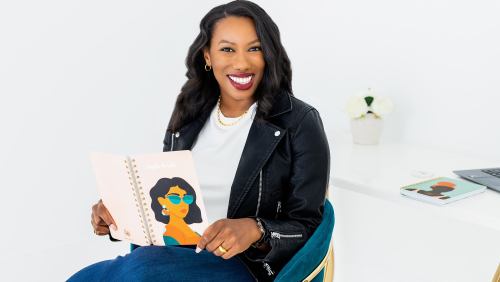
We spoke with Foster, whose BeRootedco.com is the first Black woman-owned stationery brand to make it on the retail giant's shelves, about shaking up her industry and keeping diversity, equity and inclusion top of mind.